

AI agronomy, on demand

Prescriptions on demand. Get it fulfilled in the field.

Fieldhand AI answers from the soil record. Generate a prescription and get it fulfilled in the field. Share it by link or email; your applicator is one place it can go. Order a sampling plan or a lab test, or share a report for expert review. The grower approves each step.

fieldhand.aiterra.ag

You

I farm in Iowa. My latest soil report gives phosphorus at 12.5 ppm by Bray-1. I'm growing corn aiming for 210 bu/ac. Where does that put me, and what should I do about P this season?

Fieldhand

At 12.5 ppm Bray-1, your phosphorus is in the Low category based on Iowa State University guidelines (optimum is 16-20 ppm). To support a 210 bu/ac corn crop and start building your soil test levels, plan a build-and-maintain application this fall.

  • Target rate: 100 to 115 lb P2O5 per acre (covers the ~67 lb your corn will remove, plus build-up).
  • Product equivalent: roughly 200-220 lb/ac of MAP (11-52-0) or 220-250 lb/ac of DAP (18-46-0).

Fall is a good window to broadcast this before the ground freezes. Do you have current local pricing for MAP or DAP so we can run the cost per acre?

Generate P prescription (100–115 lb P2O5/ac)Get it fulfilled in fieldShare it with your applicator: copy a link or email an invite

You

I farm in Iowa. My latest soil report gives phosphorus at 12.5 ppm by Bray-1. I'm growing corn aiming for 210 bu/ac. Where does that put me, and what should I do about P this season?

Fieldhand

At 12.5 ppm Bray-1, your phosphorus is in the Low category based on Iowa State University guidelines (optimum is 16-20 ppm). To support a 210 bu/ac corn crop and start building your soil test levels, plan a build-and-maintain application this fall.

Generate P prescription (100–115 lb P2O5/ac)Get it fulfilled in fieldShare it with your applicator: copy a link or email an invite
University scienceBuilt on soil-mapping research from NC State and Iowa State
NC State UniversityIowa State University
US patentsIssued and co-owned with NC State and Iowa State
NC State UniversityIowa State University
LiveFieldhand AI is open at fieldhand.aiterra.ag
AgLaunch365Selected for the 2024 cohort
The problem

Growers have the data, and acting on it takes time.

Most fields still get one rate across the whole field. Aiterra is built to work one field at a time.

~1/3

of corn and soy acres use variable-rate. That share has been flat since 2016, even though yield maps already cover 70–79% of them.

Industry scale, not an Aiterra field result. Source: USDA farm survey data, via McFadden (2024).

32%

of dealers say growers don’t trust site-specific recommendations. 31% say making sense of the data takes too much time.

Industry scale, not an Aiterra field result. Source: Purdue / CropLife Precision Dealer Survey (2025).

What we do

An answer, then a prescription.

Most tools stop at advice. Aiterra answers from the soil record, generates a prescription you can get fulfilled in the field, and orders the sampling plan or lab test.

01 · ASK

A soil answer

Ask Fieldhand AI about a soil test. The answer is grounded in the soil record and cites its sources.

  • Published guidelines, named in the answer
  • Projected return, when the answer includes one
  • Every number traced to its source
02 · PRESCRIBE

Get it fulfilled in the field

Generate the prescription, then get it fulfilled in the field. Share it by link or email; your applicator is one place it can go. Share a report for expert review the same way. Order a sampling plan or a lab test when the answer calls for new data.

  • Prescription, shared by link or email
  • Soil sampling plan
  • Lab testing
  • Expert review of a shared report

What's next: seeding and live expert sessions are in progress.

How it works

From a question to a shared prescription.

Fieldhand AI answers from the soil record. The grower approves the next step.

1

Ask

A grower or advisor asks a question. Or Fieldhand AI flags an issue in a briefing.

2

Answer

Fieldhand AI answers from the soil record and names its sources.

3

Prescribe

The grower approves a prescription, a sampling plan, or a lab test.

4

In the field

Get it fulfilled in the field. Share the prescription: copy a link or email an invite. Your applicator is one place it can go. Share a report for expert review the same way.

Explore the full flow →

Each season

Each season stays on the record.

A soil answer can become a prescription, a sampling plan, or a lab test. Get the prescription fulfilled in the field by sharing it. The record stays with the field.

Our science →

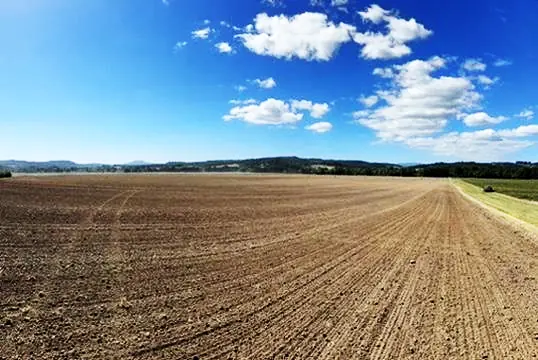
Freshly tilled field under a blue sky.
Science & IP

Science we own. AI built for soil.

Our zone science began in university labs at NC State and Iowa State. The patents are co-owned with both universities, and the university rights are licensed to Aiterra.

NC State UniversityIowa State University
Issued · Sep 5, 2023

Enhanced management zones for precision agriculture.

CO-OWNED · SOILMETRIX · NC STATE · IOWA STATE
Issued · Jul 22, 2025

Enhanced management zones for precision agriculture.

CO-OWNED · SOILMETRIX · NC STATE · IOWA STATE
Issued · Sep 30, 2025

Enhanced management zones for precision agriculture.

CO-OWNED · SOILMETRIX · NC STATE · IOWA STATE
Grey world map
Who we serve

Built for everyone who works the field.

One grower, or an advisor with many accounts. The same platform scales with the job.

Growers

A grounded answer, a prescription you can get fulfilled in the field, and a sampling plan or lab test when you need new data.

Advisors

Many accounts in one workspace, with full attribution.

Labs

Lab tests ordered from the sampling plan.

Applicators

A shared prescription, by link or email, plus sampling orders with the plan attached.

See Fieldhand AI on your own fields.

Sign up, then add a field.